How To Style A Handmade Scarf For Different Seasons
A practical step-by-step guide to How to style a handmade scarf for different seasons, including preparation, instructions, common issues, tips, and next steps.
How To Style A Handmade Scarf For Different Seasons
A handmade scarf deserves more than one season of wear. This guide explains how to style it across spring, summer, autumn, and winter by adjusting fabric weight, wrapping methods, color coordination, and care routines. You will learn to read weather and occasion, choose knots that flatter your frame, and store the scarf so it stays fresh. Each step includes a practical check so you can confirm the look works before leaving home. Whether your scarf is chunky wool or airy cotton, these calm, repeatable methods help you wear it with confidence all year.
Fast Answer
- For warm seasons, choose a lightweight scarf, drape it loosely, and pair it with breathable layers so the accessory adds color without heat.
- For cold seasons, choose a thick scarf, wrap it close to the neck, and coordinate it with a coat so warmth and proportion work together.
Before You Start
- Gather your handmade scarves and sort them by fabric weight, from light cotton or linen to medium blends and heavy wool.
- Check the care label or your own notes for each scarf so you know whether it can be washed, steamed, or only spot cleaned before you style it.
- Set a mirror near a window with natural light so you can judge color, drape, and proportion accurately before you commit to a look.
- Lay out the outfit you plan to wear, including outerwear, and place two or three scarf options beside it to compare without pressure.
Step-by-Step Instructions
Assess the scarf and the weather
Start by holding the scarf in your hands and noting its weight, texture, and drape. A scarf that falls in soft folds is likely light enough for mild days, while one that holds a thick shape is better for cold. Check the day's forecast before you choose, because a warm afternoon can make a heavy wrap uncomfortable. Lay the scarf over your arm and see how it hangs; if it feels stiff or heavy, save it for a colder day. Next, consider wind and rain, since loose ends can tangle or get damp. Choose a scarf that matches the conditions rather than fighting them. This first check matters because the right weight keeps you comfortable and prevents you from removing the scarf halfway through the day, which defeats the purpose of styling it.
Choose a base outfit that supports the scarf
The scarf should feel like part of the outfit, not an afterthought. Begin with a simple base in a neutral tone, such as a plain shirt, dress, or sweater, then add the scarf as the focal point. If the scarf has a busy pattern, keep the base calm; if the scarf is solid, you can add texture through your top or jacket. Check the neckline of your base layer, because a scarf sits best when it has room to tuck or drape without bunching. Stand in front of the mirror and notice where the scarf ends; it should not cover your entire torso unless that is the intended look. This order works because a strong base gives the scarf a clear role and prevents visual clutter, making the handmade piece look intentional and polished.
Select a wrapping method for the season
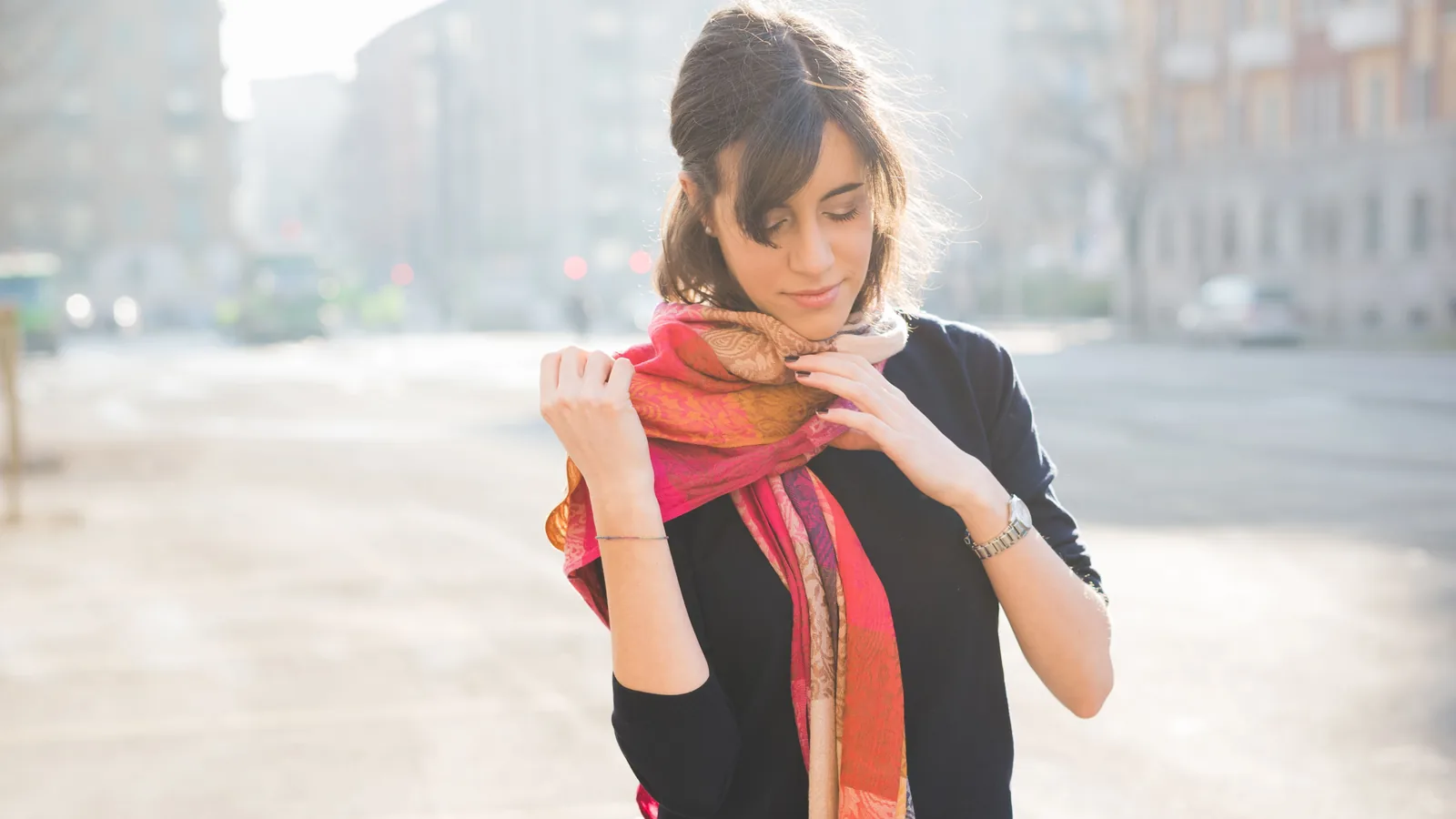
For spring and summer, try a loose drape or a single loop that leaves the ends hanging freely. This method allows air to move and keeps the scarf from feeling heavy. For autumn, a simple loop or a light knot works well with a jacket. For winter, use a double wrap or a snug knot that sits close to the neck, then tuck the ends under a coat. Practice each method slowly in front of a mirror, adjusting until the scarf feels secure but not tight. Check that you can turn your head comfortably and that the scarf does not slip when you move your arms. This check matters because a wrap that restricts movement or falls apart will distract you all day, while a secure and comfortable wrap lets you enjoy the scarf and the season.
Coordinate colors and patterns with intention
Color is the quickest way to make a handmade scarf feel seasonal. In spring, choose soft pastels or light neutrals that echo fresh growth. In summer, lean toward bright accents or crisp whites that reflect light. In autumn, reach for warm earthy tones like rust, mustard, or olive. In winter, deep jewel tones or classic neutrals add richness. If your scarf has multiple colors, pick one color from the pattern and repeat it in a small accessory, such as a hat or bag. Hold the scarf against your face in natural light to see whether the color flatters your skin tone. This check matters because a color that looks good on the hanger can look different against your complexion, and the right match makes the whole outfit feel harmonious.
Adjust proportions for your frame and layers
A scarf changes the visual shape of your outfit, so pay attention to proportion. If you are wearing a bulky coat, a thin scarf can disappear; a medium-weight scarf adds balance. If your coat is sleek, a chunky scarf can overwhelm it, so choose a lighter one or wrap it more compactly. Notice where the scarf ends: a long vertical line can make you look taller, while a bulky knot near the face draws attention upward. For a balanced look, keep the scarf from extending past your coat's hem by more than a few inches. Move your arms and sit down to see how the scarf behaves. This check matters because proportion affects comfort and confidence, and a small adjustment can turn a good outfit into a great one.
Finish, test, and store the scarf properly
Once the scarf is styled, do a final comfort test. Turn your head, raise your arms, and walk a few steps. The scarf should stay in place without choking or slipping. Check the mirror from the front and side to confirm the drape looks even. If you plan to wear the scarf again soon, hang it on a wide hook or fold it loosely so it keeps its shape. For long-term storage, clean it according to its care notes, then store it flat or rolled to prevent stretching. Keep it away from direct sunlight and damp areas. This final step matters because proper storage protects the handmade work and keeps the scarf ready for the next season, so you can enjoy it for years rather than replace it.
Quick Reference
| Situation | Action | Why it helps |
|---|---|---|
| You are heading out on a warm spring day with a light breeze. | Choose a cotton or linen scarf, drape it once over your shoulders, and let the ends hang loose instead of tying a knot. | A loose drape allows airflow and prevents overheating while still adding color and a finished look to your outfit. |
| You are dressing for a cold winter morning with wind and possible snow. | Pick a thick wool scarf, wrap it twice around your neck, and tuck the ends inside your coat before you put on gloves. | A double wrap seals warmth near your body and prevents wind from reaching your neck, while tucking the ends keeps them dry and secure. |
| You want to wear a handmade scarf to a casual indoor event in autumn. | Select a medium-weight scarf, loop it once without pulling tight, and let the ends rest on your chest rather than hiding them. | A single loop looks relaxed and keeps the scarf visible as part of your outfit, which is appropriate for indoor settings where heavy wrapping would be too warm. |
Common Issues
- The scarf feels too bulky and overwhelms your outfit.: Switch to a lighter scarf or wrap the current one more compactly by folding it in half before looping. Check in the mirror that the scarf does not extend past your coat hem by more than a few inches. A bulkier scarf can work with a simple, streamlined coat, but if the outfit already has volume, a lighter scarf restores balance.
- The scarf keeps slipping off your shoulders or unraveling.: Try a different knot or wrap that uses friction, such as a simple loop with the ends crossed behind your neck. If the fabric is slippery, choose a textured scarf or add a small pin near the shoulder. Test by turning your head and walking a few steps. A secure wrap prevents distraction and keeps the scarf looking neat throughout the day.
- The colors clash with the rest of your outfit.: Remove the scarf and hold it against your base layer in natural light. Choose one color from the scarf and repeat it in a small accessory, or swap to a neutral scarf. If the scarf is handmade and you want to wear it anyway, simplify the rest of the outfit to solid, calm tones so the scarf becomes the clear focal point.
Advanced Tips
- Use a scarf to bridge seasonal transitions by layering it over a light jacket in spring and under a heavy coat in winter, adjusting the wrap tightness as the temperature changes.
- Create a vertical line by letting the scarf ends hang straight down rather than knotting them, which can make your silhouette look longer and more elegant.
- Photograph your best scarf and outfit combinations in good light so you can recreate them quickly on busy mornings without guessing.
Final Checklist
- Confirm the scarf weight matches the day's temperature and wind conditions before you leave home.
- Check in a mirror that the scarf sits comfortably and does not restrict your head or arm movement.
- Match one color or texture from the scarf to another part of your outfit for a cohesive look.
- After wearing, clean the scarf as needed and store it flat or rolled to keep its shape for next season.
FAQ
Can I wear a handmade wool scarf in summer?
Yes, but choose a thin wool or wool-blend scarf and wear it loosely, perhaps draped over your shoulders rather than wrapped around your neck. Wool can breathe, but a thick scarf will likely feel too warm in high heat. Check the day's forecast, and if the temperature is high, consider a lighter fabric like cotton or linen. If you still want the wool look, wear it indoors in air-conditioned spaces or during cool evenings. Always test comfort by stepping outside briefly before committing to the full day.
How do I keep a long scarf from dragging on the ground?
Try a wrap that shortens the visible length, such as looping the scarf once and then tucking the ends into your coat or crossing them behind your back. You can also knot the ends loosely at chest level. If the scarf is still too long, fold it in half before wrapping so the ends sit higher. Check by walking a few steps and looking down; the scarf should clear the ground. For very long scarves, a simple belt over the scarf can hold it in place while adding shape to your outfit.
What is the best way to store a handmade scarf between seasons?
First, clean the scarf according to its care notes, because stored stains can set over time. Then fold it loosely or roll it to prevent creases and stretching. Store it flat in a breathable cotton bag or a clean pillowcase, away from direct sunlight and damp areas. Avoid hanging heavy scarves for long periods, as this can distort the stitches. If you use a storage bin, make sure it is clean and dry, and check the scarf every few months for pests or musty smells. Proper storage keeps the handmade texture intact so it is ready to wear next season.